Tracing Midfield Dominance Patterns to Refine Accumulator Builds in Allsvenskan Seasons
Logan Flores · Aug 23, 2026
Tracing Midfield Dominance Patterns to Refine Accumulator Builds in Allsvenskan Seasons
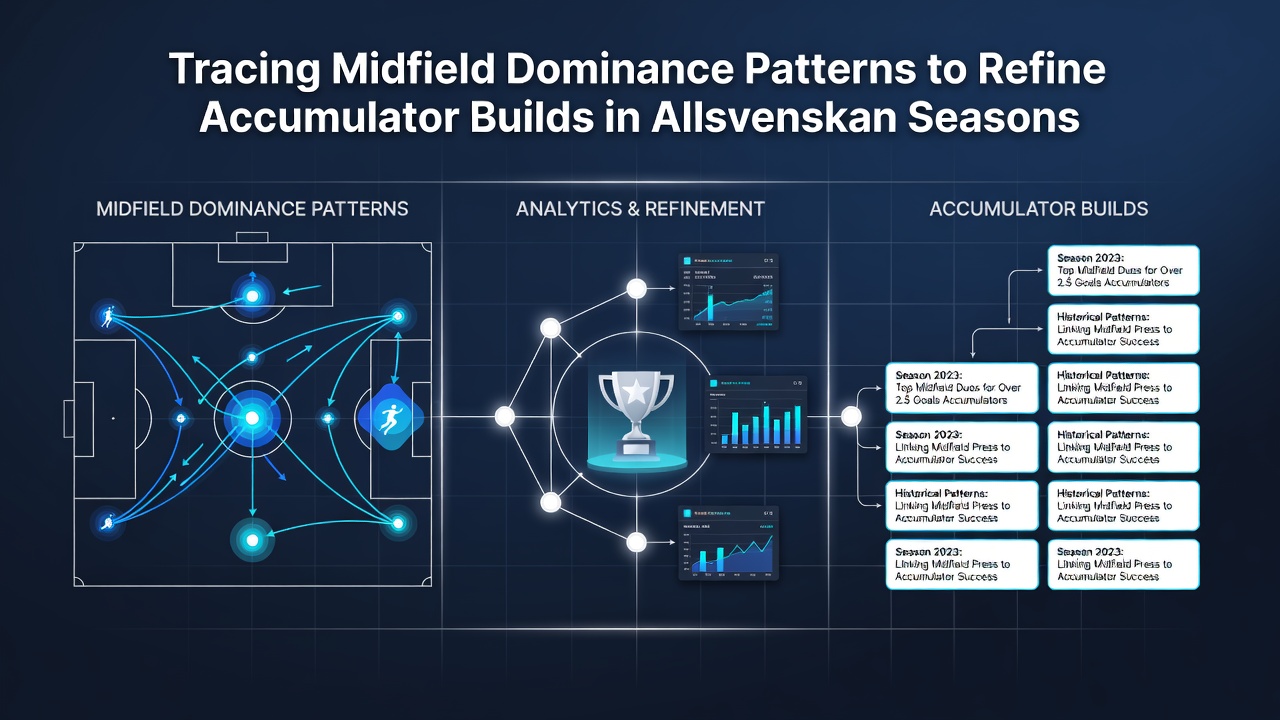
Analysts track midfield dominance patterns across Allsvenskan seasons through detailed metrics that capture possession retention, progressive passes, and defensive recoveries in central areas, and these measurements help refine accumulator selections by highlighting teams with consistent control over game tempo. Data from the Swedish Football Federation shows that squads maintaining above 55 percent midfield possession in the first half of matches record higher points totals over full campaigns, while teams struggling in this zone often face elevated loss rates in tight fixtures.
Core Metrics Behind Midfield Control
Researchers compile statistics on completed passes in the middle third, tackles won within 30 meters of the center circle, and aerial duel success rates, and these figures reveal which clubs sustain pressure throughout 90 minutes. Figures from the 2025 campaign indicate that clubs averaging 18 progressive passes per game from midfield positions advanced further in league standings than those below that threshold, yet the same data sets also flag variance during August fixtures when fixture congestion peaks.
Observers note that ball recoveries in midfield correlate strongly with reduced goals conceded, while teams posting high numbers in this category frequently cover more ground in transition phases. Studies conducted by sports analytics groups at European universities confirm these links through multi-season samples that include Allsvenskan matches played between 2022 and 2025.
Seasonal Patterns Emerging in 2025 and 2026
Review of match logs from the 2025 Allsvenskan season demonstrates that certain clubs established repeatable dominance sequences during July and August windows, and these sequences carried forward into later months with measurable consistency. In August 2026, early returns show similar trends among teams that rotate central midfielders effectively, allowing fresh legs to maintain pass accuracy above 82 percent even after 60 minutes.
One dataset compiled by independent performance analysts highlights how clubs with balanced left-right midfield pairings generate more scoring opportunities from set pieces, and this element proves useful when constructing accumulators that combine match outcomes with over-under totals. Patterns also appear in away fixtures, where visiting sides that win at least 45 percent of midfield duels secure draws at higher rates than expected from historical baselines.
Integrating Patterns Into Accumulator Construction
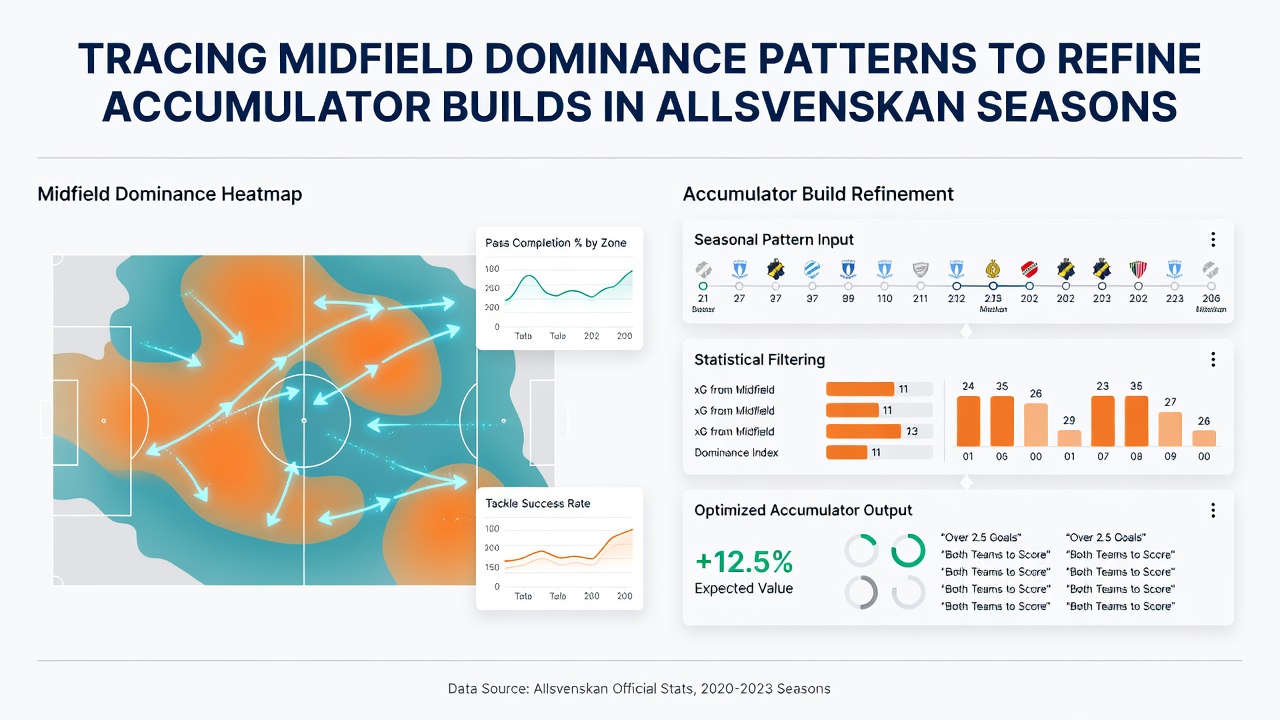
Betting researchers combine midfield dominance indicators with head-to-head records and current form tables to adjust stake distributions across multiple selections, and this layered approach reduces exposure when individual matches deviate from expected scripts. Teams that control central zones tend to produce lower-scoring games when matched against similarly structured opponents, a factor that shapes accumulator choices involving both win-draw-win and total goals markets.
Statistics released by the UEFA technical reports archive illustrate how Scandinavian leagues mirror broader European trends in midfield metrics, while data from the Journal of Sports Science and Performance provides additional context on recovery rates in compact schedules. Accumulator builders review these sources alongside league-specific tracking tools to identify value in combinations that span three or four fixtures.
Case Examples From Recent Campaigns
During the 2024 season one club recorded an eight-match streak of midfield dominance that coincided with an undefeated run, and analysts later traced the streak to improved pressing triggers implemented after the summer transfer window. Similar sequences appeared in 2025 when two mid-table sides exceeded expectations by sustaining high pass completion rates in central areas despite limited squad depth.
August 2026 fixtures already show early signs of comparable shifts, particularly among teams that added versatile central players during the winter window. These developments feed directly into accumulator models that weigh recent midfield metrics more heavily than older season averages when schedules tighten.
Data Limitations and Measurement Considerations
Tracking systems capture most on-ball actions yet leave gaps in off-ball positioning and fatigue indicators, and researchers therefore combine multiple data streams to reach more reliable conclusions. Weather conditions common in Swedish summer months also influence passing accuracy, which requires adjustments when projecting patterns across the full August-to-October period.
League officials continue to refine optical tracking standards, and updates scheduled for the 2026-2027 cycle aim to include more granular midfield-specific variables. Until those enhancements arrive, analysts rely on existing datasets that still deliver actionable correlations between central control and match results.
Conclusion
Tracing midfield dominance patterns supplies a measurable foundation for refining accumulator builds in Allsvenskan seasons, and continued collection of pass, tackle, and recovery data supports ongoing adjustments as each campaign unfolds. Patterns observed through August 2026 and prior years demonstrate repeatable links between central control and competitive outcomes, while integration with external research sources strengthens the analytical framework used by performance teams across the league.